
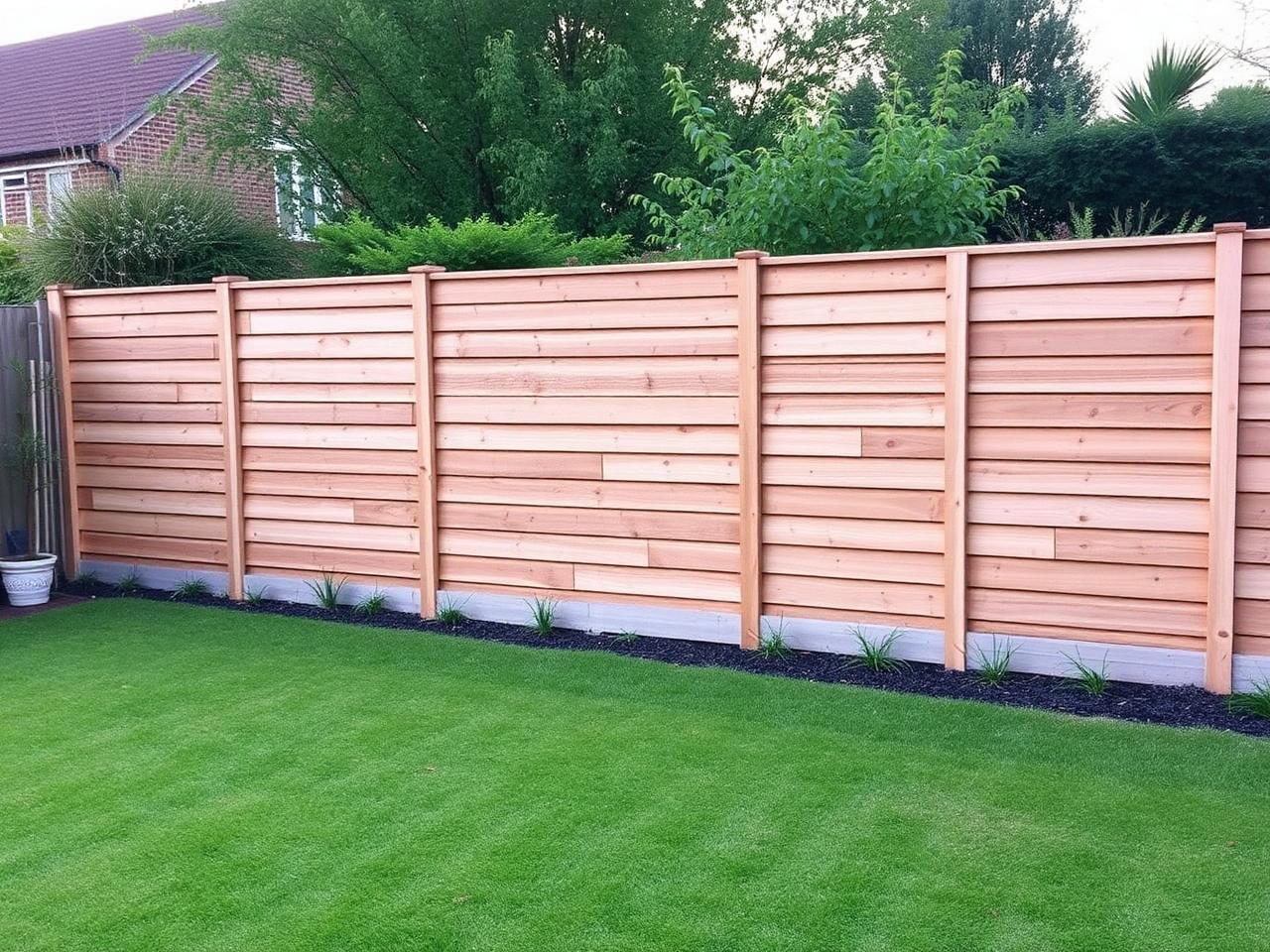
Why garden fencing matters more than people think
A garden fence does four jobs at once: it marks the boundary, it gives you privacy, it shelters the planting behind it, and it sets the visual tone of the garden the moment you walk through the back door. Get it wrong and it dominates the garden for the next fifteen years. Get it right and you stop noticing it within a week.
In Bournemouth, Poole and Christchurch we install or replace fencing on roughly a third of every garden job we do. Coastal wind, sandy soil and the close terraces typical of Westbourne, Southbourne and parts of Poole all make fencing decisions more consequential than they look on paper. A panel system that handles inland Surrey just fine can rip out of the ground in a single winter storm on the BCP coast.
This guide walks through how to choose the right fence for your garden: the realistic options, the materials that last on the south coast, the planning rules nobody mentions, and how much it actually costs to do properly. It's the same advice we give clients on site visits, written down once.
Closeboard, panels, slatted or composite — which is right?
There are four mainstream choices for residential fencing in Dorset, and they each suit a different use case.
Featheredge (closeboard) is the strongest and longest-lasting traditional option. Each panel is built on-site from vertical featheredge boards on a horizontal rail frame, fixed between concrete or timber posts. It handles wind, lasts 20–25 years if pressure-treated properly, and looks understated. It's the option we recommend for most exposed Dorset boundaries.
Lap panels (the brown waney-edge fences you see on most British estates) are the cheapest and quickest option. They're fine for sheltered urban gardens and last around 10–15 years, but they're the first thing to fail in coastal wind. We rarely recommend them anywhere south of the A35.
Slatted modern fencing (horizontal contemporary slats — usually softwood, hardwood or Iroko) is what we install on most design-led BCP rebuilds. It looks superb, lasts well if specified correctly, and works beautifully as a screen for raised patios in tight urban gardens. Cost is roughly double a featheredge equivalent, but on a design-led project it's usually worth the difference.
Composite fencing (the same technology as composite decking) is the maintenance-free premium option. It costs roughly three times softwood, never needs treating, doesn't warp on the coast and lasts 25+ years. We're installing it more and more, particularly on Sandbanks, Canford Cliffs and second-home gardens.
Timber, posts and concrete — the bits that fail first
Most fences don't fail because the panels go — they fail because the posts rot at ground level. Choose the post system carefully and you double the life of any fence.
Concrete posts (with concrete gravel boards) are what we install on the majority of Dorset boundaries. They never rot, they don't move in wind, and panels can be slid out and replaced individually if one ever gets damaged. The downside is the look — they're industrial, visible behind the panels, and not what you want on a design-led job.
Pressure-treated softwood posts (typically 100×100 mm, sunk 600 mm deep in postcrete) look right behind contemporary slatted fencing and good with featheredge. Treated UC4-grade timber lasts 15–20 years on the south coast if installed properly. The failure point is always at ground level — water sits, rot starts, the post snaps in a storm.
Metal post systems (post-spike or driven steel) are a compromise we sometimes use where digging concrete foundations isn't possible (over services, tree roots, or for temporary boundaries). They're less robust than dug-in concrete or timber, and we don't recommend them for any exposed boundary.
The gravel board at the bottom of the fence is the unsung hero. A concrete gravel board (150 mm or 300 mm) keeps the timber panels off wet ground, where 90% of timber rot starts. Skip the gravel board and you cut the fence's life in half.
Coastal considerations for BCP gardens
The Dorset coast brings three challenges that change how fencing should be specified: salt-laden wind, sandy free-draining soil that gives posts less to grip, and the occasional channel storm that produces gusts well above the panel manufacturer's wind ratings.
For exposed boundaries on Sandbanks, Canford Cliffs, Mudeford and Highcliffe we always specify concrete posts (heavier, immovable) with featheredge or composite panels rated for higher wind loads. Slatted fencing with gaps between boards actually performs better than solid panels in extreme wind because the wind passes through rather than pushing against — counter-intuitive but true.
Sandy soil needs deeper post holes than the standard 600 mm — we typically go 750–900 mm with a wider base of postcrete on coastal jobs. The extra hour per post pays off every time we drive past a job that's still standing after a winter that took out the neighbour's fence.
For salt exposure, hardwood (Iroko, oak, sweet chestnut) and composite outlast softwood by years. If you're within a few hundred metres of the seafront and the fence is in a wind tunnel, the composite premium is usually worth paying once rather than replacing softwood every decade.
Planning rules, party walls and neighbour etiquette
Most domestic fencing in BCP doesn't need planning permission, but there are exceptions worth knowing before you start.
The headline rule: fencing up to 2 metres high anywhere except adjacent to a highway is permitted development. Adjacent to a highway (front gardens, side returns onto a road), the limit drops to 1 metre. Above those heights you need planning permission, and the council does enforce.
Listed buildings, properties in conservation areas (parts of Westbourne, central Christchurch, Branksome Park) and homes with an Article 4 direction can have different rules — always check with BCP Council before you commit to anything bigger than a standard 1.8m boundary.
The boundary itself is rarely the simple line people assume. The deeds will usually show which side owns which fence (look for the "T" mark on the boundary plan — the upright of the T points into the owning property). If the deeds are silent, no-one owns it and either neighbour can replace it, but only on their own side. We always check ownership before quoting and talk to the affected neighbour before we start — it saves problems later and most people appreciate the courtesy.
Party Wall Act issues are rare with fencing but real if foundations cross the boundary (some concrete posts can). For 1.8 m residential boundaries the act usually doesn't apply, but we'll flag it if it does on the day we quote.
Installation done properly — what to insist on
Fencing is one of those jobs where the cost difference between a good installation and a cheap one is roughly 20%, but the lifespan difference is roughly double. The things that separate the two are mostly invisible once the job is done.
Post holes should be dug to at least 600 mm (750 mm on coastal exposure), wider at the base than the top, with a 50 mm gravel drainage layer underneath and the post set in postcrete that's actually allowed to cure for 24 hours before panels are loaded.
All cut ends of pressure-treated timber should be treated on site with end-grain preservative — the factory treatment only penetrates so far, and cuts expose untreated wood. If you watch the installer cut a post and immediately move on without treating the cut, the post will rot from the cut down within five years.
Panels should sit on concrete gravel boards, not on the ground. Fixings should be stainless steel or galvanised — bright steel will streak rust down the timber within a winter. And the top of every post should be capped to keep water out of the end-grain.
After installation, a freshly built softwood fence should be left to weather for 6–12 months before you treat it (the wood needs to dry below 20% moisture content). After that, a coat of decent oil-based preservative every 2–3 years adds genuine years to its life.
Realistic fencing costs in Dorset
Fencing prices change with timber market conditions, but the ranges below are honest figures from BCP jobs we've quoted and built in the last twelve months. Everything is supplied and installed, with all waste removed.
A standard 1.8 m lap-panel fence on concrete posts and gravel boards runs around £85–£110 per linear metre. A featheredge fence to the same spec is £110–£140 per linear metre. Slatted contemporary fencing is £180–£260 per linear metre depending on the timber. Composite fencing is £250–£350 per linear metre.
For perspective, a typical Bournemouth semi-detached rear garden boundary is around 20–25 metres total, so a full featheredge replacement is usually £2,200–£3,500 supplied, installed and old fence removed.
Allow extra for: clearing established climbers and shrubs along the line (a day's labour for most gardens), tricky access (carrying materials through the house adds 15–20%), and any boundary disputes that need surveyor input.
We always quote fencing as a fixed total for the job, not "per metre then we see" — there should be no surprise costs at the end. If you're getting wildly different quotes from different contractors, the difference is almost always in the post system, the timber grade, and whether end-grain treatment is included.
Aftercare — making your fence last 25 years
A well-installed pressure-treated softwood fence should give you 15–20 years before any major intervention. A concrete-post fence with composite or hardwood panels should comfortably exceed 25 years. Either way, a small amount of upkeep extends it significantly.
For softwood fencing: leave a new fence for 6–12 months before treating, then apply an oil-based timber preservative (Osmo, Cuprinol Shed & Fence, or Sadolin) every 2–3 years. Spray application is fastest; brush gives the best penetration. South-facing fences degrade faster than north-facing ones and may need more frequent treatment.
For hardwood and composite: nothing more than an annual jet wash on a low setting and a brush-down for cobwebs. Hardwood will silver naturally over a few years — if you prefer to keep the warm tone, an annual coat of decking oil maintains it.
Watch for: panels working loose at the top (a 30-second fix with two extra fixings each), gravel boards eroding from string trimmers (use steel edging in front of them if it keeps happening), and ivy or honeysuckle taking hold (cut hard back annually — the weight of established climbers will pull a fence over).
Every fence we install comes with a written aftercare note specifying the right products for the timber we used and the right intervals for the exposure your fence sits in.
Garden fencing — pre-install checklist
- Confirm which side of the boundary you own (check the title deeds)
- Talk to the affected neighbour before any work starts
- Measure twice — boundary length and target height
- Decide on panel style: featheredge, slatted, lap or composite
- Always specify concrete gravel boards
- Use 600–900 mm post holes depending on exposure
- Insist on end-grain preservative on every cut
- Use stainless or galvanised fixings, never bright steel
- Check planning rules if you want over 2 m (or 1 m next to highway)
- Plan aftercare: first treatment 6–12 months in, then every 2–3 years