
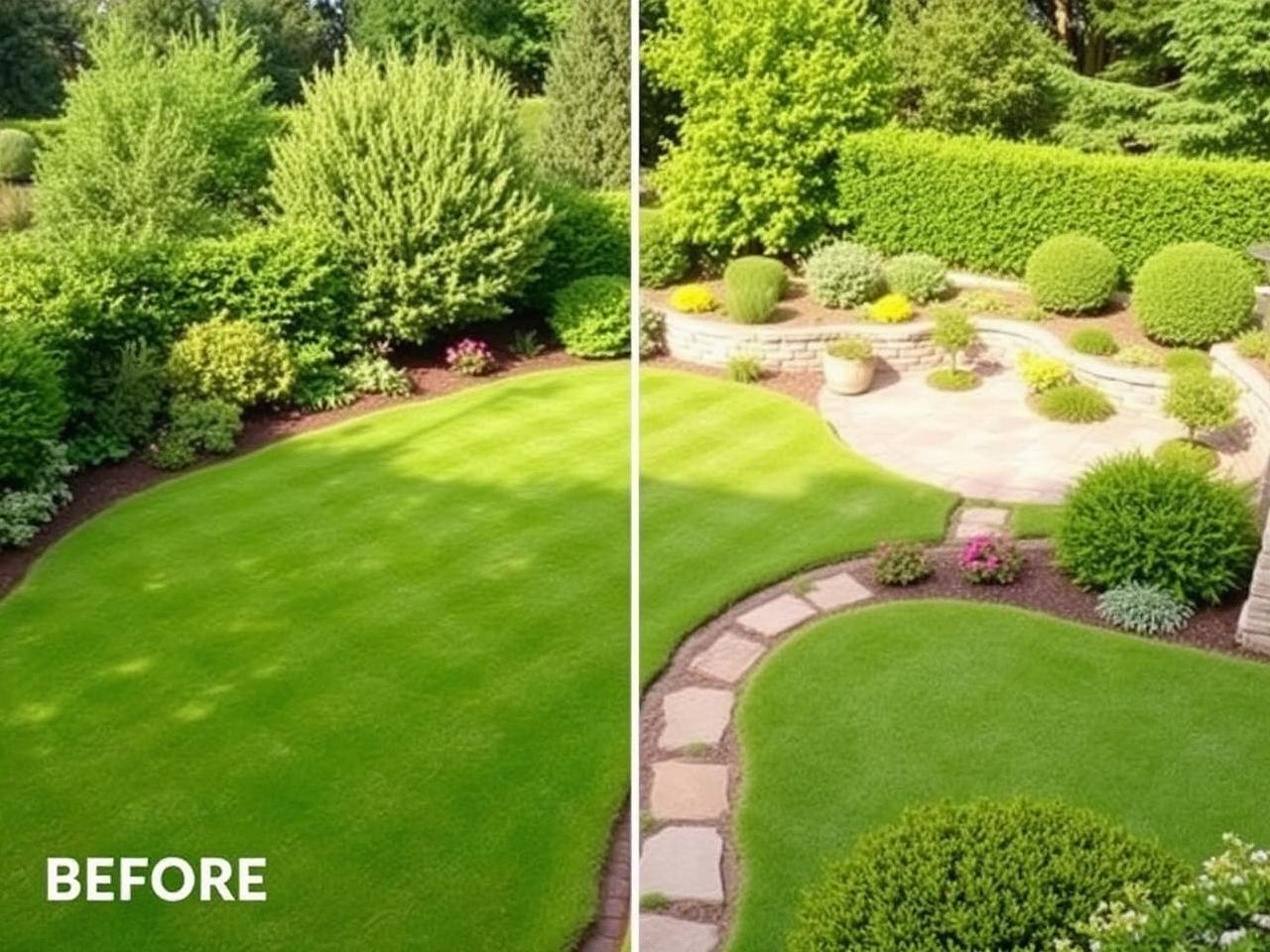
What counts as a garden restoration
Most of the gardens we restore across Bournemouth, Poole and Christchurch fall into one of three groups. The first is the inherited garden — a probate sale, a rental that's been neglected for years, or a new purchase where the previous owner stopped gardening a decade ago. The second is the post-build garden — a home extension or loft conversion that left the back garden as a builder's yard. The third is the "ran out of time" garden — owners who loved it once, then life got busy and the brambles took over.
A restoration is different from a redesign. The bones of the garden are usually still there — borders, paths, a patio, a lawn that used to work. Our job is to strip back fifteen years of overgrowth, work out what's salvageable, and bring it back to something you can actually use again. Sometimes that ends in a full redesign; more often it doesn't need to.
This guide walks through how a typical Dorset restoration unfolds: how we assess what you've got, how we phase the work to keep costs sensible, the realistic timeline from first visit to handover, and how we make sure the garden stays manageable once we leave.
The first visit and assessment
Every restoration starts with us walking the garden with you. We're looking for three things: what's structurally sound and worth keeping, what's salvageable with effort, and what needs to come out. Mature trees and established hedges are almost always worth retaining — a forty-year-old beech hedge is irreplaceable in any sensible budget. Patios laid on a good base can usually be lifted, cleaned and re-laid. Old fences are often beyond saving and cheaper to replace than rescue.
We also look for the hidden things that determine cost: drainage problems that show up as moss and bare patches in lawn, soil compaction from years of dog traffic, invasive species (Japanese knotweed is increasingly common across BCP — it needs proper licensed treatment, not a casual rip-out), and any structural issues with retaining walls, raised beds or boundary fencing.
By the end of that visit we'll usually have a clear sense of whether the right answer is a six-day clearance and tidy, a three-week structural restoration, or a full rebuild. We'll give you a written quote within a few days that itemises each phase so you can choose what to do now and what to defer.
Phase one — clearance and triage
Almost every restoration starts with a hard clearance week. Brambles, ivy, self-seeded sycamores, choked borders, ten years of leaf litter — it all comes out so we can see what we're working with. We strip back to bare soil, expose the existing paths and edges, and uncover any structures hiding under the growth. It's not unusual for clients to discover a paved area, a pond or a stone wall they didn't know was there.
All green waste leaves under our waste carrier's licence — this is non-negotiable and one of the cleanest signals you're working with a professional team. Skips fill quickly on restoration jobs: a typical clearance produces 3–8 tonnes of green and mixed waste, and proper disposal is included in our quotes upfront, not added as a surprise at the end.
This phase usually takes three to seven days for a standard BCP garden, and it's the most visually dramatic week of any restoration. Most clients send us photos partway through the clearance because they can finally see the garden's shape for the first time in years.
Phase two — structural restoration
With everything cleared we can see what the garden actually needs. Restoration work usually splits across a handful of trades and we do them all in-house: paving repairs and re-pointing, fence and gate replacement, lawn reinstatement (turf or seed), border re-shaping, mature tree work where needed, and hedging back to the correct line.
Lawns are the area where restoration most often pays for itself. A neglected lawn can almost always be brought back without re-turfing — typically a hard scarify to remove the thatch, hollow-tine aeration to ease compaction, top-dressing with a sandy loam, overseeding and a balanced feed. Six to eight weeks later you have an entirely new-looking lawn at a fraction of the cost of full re-turfing.
Borders get the same treatment in plant terms: we lift, divide and replant what's worth keeping (peonies, hostas, hellebores, established shrubs), cut hard back what will respond (lavender, hebes, dogwoods), and remove what's beyond saving. Gaps get filled with appropriate replacements rather than starting the planting scheme from scratch — restoration, not replacement.
When restoration becomes redesign
Sometimes the right answer halfway through a restoration is to stop restoring and start redesigning. The trigger is usually one of three things: the existing layout doesn't work for how the family lives now (new patio doors, a young family, a dog), the structural work needed exceeds the value of what would be restored (a failing retaining wall, a sunken patio, a fence line that's collapsed), or the maintenance burden of the original garden is what created the neglect in the first place.
When that happens we'll stop, sit down with you, and re-quote based on a sensible redesign of the affected zones — usually keeping mature trees, established hedges and good structural elements, and rebuilding the bits that no longer serve. This is when restoration jobs evolve into the kind of project we cover in our Low Maintenance Gardens in Dorset pillar guide.
The honest decision tree is: if restoring the existing garden costs more than 60% of what a fresh redesign would, redesign. If it costs less than 40%, restore. The grey zone in between is a conversation, and we'll have it openly with you rather than quietly billing for both.
Realistic timelines and what to expect on site
A small clearance-and-tidy restoration — typical of a Bournemouth terrace or a Poole rental between tenants — is usually a single week on site. We arrive Monday morning, clear and dispose through Tuesday and Wednesday, do the structural work and planting through Thursday, and hand over a fully usable garden on Friday afternoon.
A standard residential restoration with lawn reinstatement, border replanting, paving repairs and some new fence panels typically runs two to three weeks. We work in a continuous block rather than spreading across a season — it's faster, less disruptive and produces a better result.
Full restorations that tip into partial redesign run four to eight weeks. We'll always give you a written programme at the start so you know which week the noisy work happens, which week we need vehicle access, and which week you'll have a working garden back. Most clients are surprised by how clean we keep the working site — boards over delicate areas, daily clean-up, and no tools left out overnight.
Restoration costs — honest ranges from real Dorset jobs
Costs depend heavily on access, what's underneath the overgrowth, and how much of the original garden is salvageable. The ranges below are based on jobs we've actually completed in BCP postcodes over the last year.
A small clearance, tidy and basic replanting on a Bournemouth terrace front or rear (around 30–60 m²) typically runs £1,800–£4,500.
A standard residential restoration with lawn reinstatement, border work, paving repairs and minor fencing on a mid-size BCP garden (80–150 m²) usually sits between £6,500 and £14,000.
A full restoration that includes substantial fencing replacement, retaining wall work, drainage improvements, full lawn renovation and a properly replanted scheme runs £15,000–£28,000 for most Dorset gardens we see.
If the restoration tips into partial or full redesign — typically when the patio, retaining or layout has to change — costs run from £25,000 upwards in line with our regular landscaping rates.
For comparison, gardens we restore have usually been let go for five to fifteen years. The annual cost of professional maintenance to keep them in good order from that point is £1,500–£3,000 a year for most BCP homes — a fraction of what it costs to restore the same garden every decade.
How we make sure it doesn't slip back
Most restored gardens go back to where we found them within five years if the maintenance plan isn't sorted at handover. We treat aftercare as part of the build, not an afterthought.
Every restoration we deliver comes with a written maintenance plan: what to do each month, what to leave alone, when to feed, when to prune, and what to watch for. For clients who'd rather not manage it themselves we set up a regular maintenance schedule — usually monthly through the growing season, bi-monthly through winter — that keeps the garden exactly as we handed it over.
We also build for lower ongoing maintenance wherever we restore. That means proper edging between lawn and beds (so they stop bleeding into each other), mulched borders (which suppress most weeding), evergreen-led planting (which holds structure through winter), and clear access paths (so nothing gets walked on that shouldn't be). Restoration done well should be a once-in-a-generation job, not something you repeat in ten years.
Restoration day-one checklist
- Walk the garden with a clear eye for what to keep, salvage or remove
- Photograph everything before the clearance starts
- Check for invasive species (Japanese knotweed especially)
- Confirm boundary lines with neighbours before any fencing work
- Test the soil — restoration is the perfect time to amend it
- Decide on a maintenance plan before the build starts
- Allow for proper waste disposal in the budget — it's never trivial
- Plan vehicle access for skips, dumpers and material deliveries
- Save mature plants by lifting and heeling-in during heavy clearance
- Don't restore failing structures — replace them while everything's open