
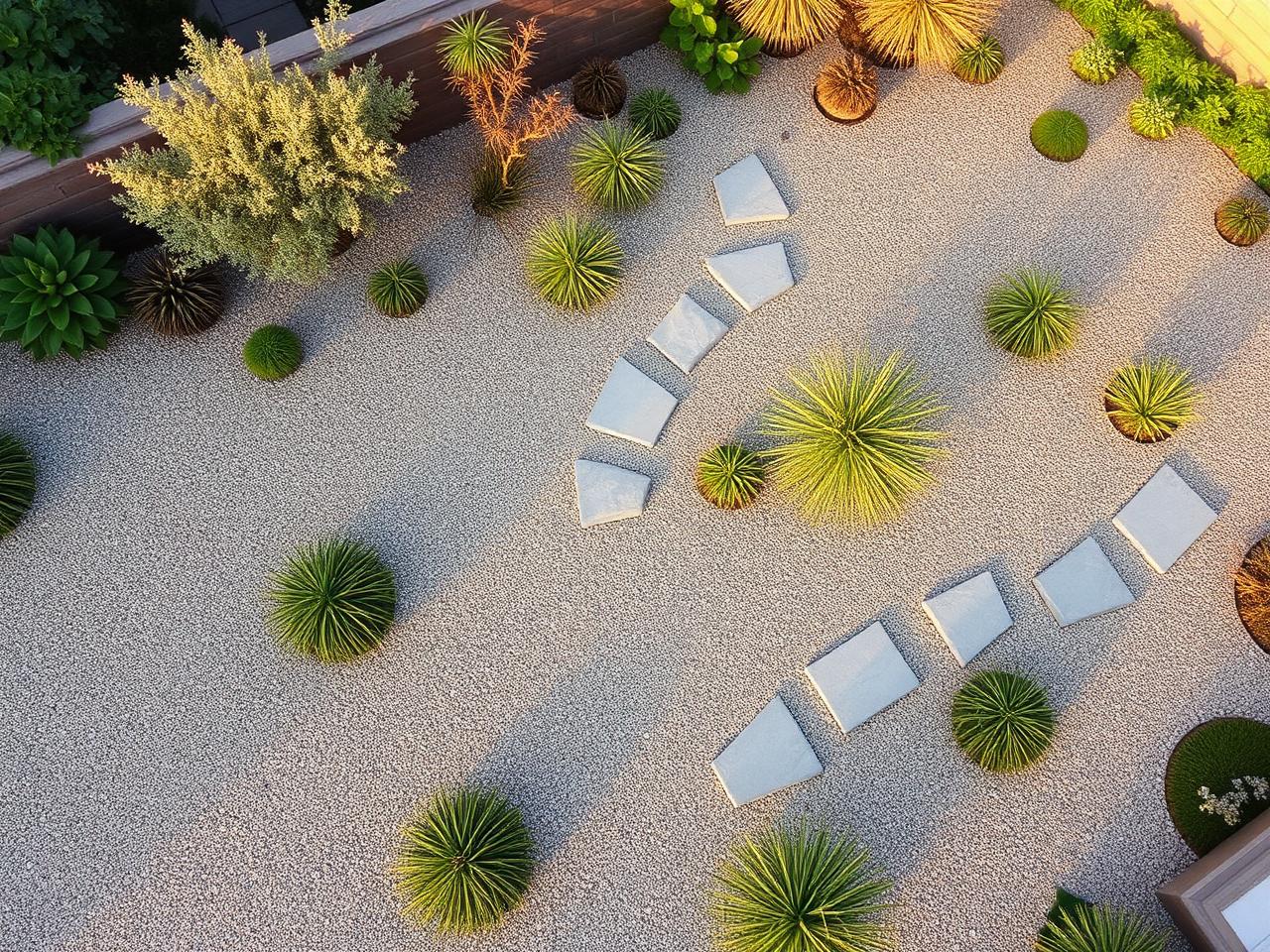
What a low maintenance garden really means in Dorset
A low maintenance garden isn't a bare garden — it's a garden that's been designed and built so the work it asks of you each year is small, predictable and pleasant. In Bournemouth, Poole and Christchurch that usually means dealing well with three local realities: sandy free-draining soil, salt-tinged coastal wind on the south-facing plots, and long stretches of dry summer that punish thirsty lawns.
The right answer for most BCP homes is a mix: hard-wearing surfaces where you walk and sit, gravel or planted ground cover where you used to mow, and tough, mostly evergreen planting that looks good for nine months of the year without intervention. The wrong answer is plastic grass over a poorly drained base, or a "stone garden" with no soil prep — both look tired within two summers.
In this guide we walk through the design choices we use on Dorset jobs week in, week out: lawn alternatives, the right gravel build-up, drought-tolerant planting that suits coastal conditions, sensible irrigation, and realistic costs so you can plan a budget that holds up.
Designing for less work, not less garden
Before you choose materials, decide what you actually want the space to do. Most low maintenance briefs we take on in Dorset land on one of three shapes: a calm gravel-and-evergreen garden for a downsizing couple in Poole, a robust family garden in Bournemouth with a generous patio and a small lawn or grass alternative for the dog, or a smart "second home" garden in Sandbanks or Mudeford that has to look after itself between visits.
Get the layout right and the maintenance burden roughly halves. Big, simple shapes beat fiddly beds. Mowing strips and hard edges beat lawn edges grown into borders. One or two well-judged focal trees beat a dozen pots that all need watering. And a clear circulation path — patio to gate, patio to shed, patio to washing line — stops the grass getting trampled at the corners where it would always struggle anyway.
We typically zone the garden into a hard living area near the house (patio or porcelain), an easy ground plane (gravel, planted ground cover or a tough hybrid lawn), and a planted edge of evergreens, ornamental grasses and a few Mediterranean shrubs that thrive on the Dorset coast.
Lawn alternatives that suit BCP soil
Lawns are the single biggest maintenance burden in most British gardens, and they struggle particularly on the sandy soils that run through Bournemouth and into Poole. If you don't use your lawn for kids or pets, replacing it is usually the highest-leverage change you can make.
Gravel gardens are our most-installed answer. Done properly — geotextile, sub-base where needed, 40–50 mm of angular 10–14 mm gravel, edged in steel or timber — they shrug off Dorset summers, drain heavy winter rain, and host superb drought-tolerant planting. Lavender, rosemary, santolina, euphorbia and ornamental grasses all behave like they're back in the Mediterranean.
Ground cover planting (creeping thyme, vinca minor, geranium 'Rozanne', heucheras, sedum) replaces grass with something that flowers and never needs cutting. Clover lawns and microclover mixes work well for families who want green underfoot without the watering bill.
Artificial grass is sometimes the right answer for shaded north-facing plots, dog runs or rental properties where appearance has to hold up year-round with zero input. We only recommend it on a properly built MOT type 1 base with adequate drainage — anything less and you'll be replacing it within five years.
Drought-tolerant planting for coastal Dorset
Bournemouth, Poole and Christchurch sit in one of the warmest, sunniest pockets of the UK. That's good news — it means you can plant a Mediterranean-leaning palette that thrives on neglect once established. The trick is choosing plants that handle wind, sandy soil and the occasional cold snap rolling off the channel.
Reliable low-maintenance evergreens for the BCP area include Pittosporum tobira 'Nanum', Choisya ternata 'Sundance', Hebe 'Mrs Winder', Phormium tenax, and Olea europaea (yes, olives do well in sheltered Sandbanks and Canford Cliffs gardens). For coastal exposure, Griselinia littoralis makes an outstanding evergreen hedge that handles salt-laden wind better than any other UK option.
Ornamental grasses give you movement and structure for almost no work — Stipa tenuissima, Calamagrostis 'Karl Foerster' and Pennisetum 'Hameln' will all give twelve months of interest with a single annual cut-back. Layer in lavender, perovskia, salvias and santolina for summer colour, then anchor the whole thing with two or three multi-stem shrubs (amelanchier, cornus kousa, or a clipped Quercus ilex).
Surfaces, edges and materials that last
The single biggest determinant of how much work your garden asks of you, year after year, is what you stand on. Patios and paths laid on a proper sub-base with the correct mortar bed don't move, don't weed up through the joints, and don't need re-pointing every other year.
For patios we mostly install porcelain (20mm thick, vitrified) — it doesn't absorb water, doesn't stain from algae or fallen leaves, and rinses clean with a hose. Indian sandstone is a softer-looking, lower-cost option but needs sealing every few years on the south coast where lichen takes hold quickly.
Edges are the second hidden maintenance driver. Steel edging between gravel and beds, or between lawn and patio, stops the boundaries blurring — which is what creates the "messy" look that prompts most weekend tidy-ups. A 100 mm steel or aluminium edge installed properly will last twenty years and disappear visually into the planting.
For paths we use the same materials we use for patios, run on a consistent radius, with no awkward step-overs. Continuity reads as calm — and calm reads as low maintenance.
Watering, feeding and the bare minimum upkeep
A properly designed low maintenance garden in Dorset should need almost no watering once the planting is in its second summer. We achieve that by planting in autumn or early spring (so roots establish before drought), mulching every bed with 50 mm of bark or composted green waste, and grouping thirstier plants close together rather than dotting them through dry zones.
For homes that travel a lot — second homes, Airbnb properties, the high-end Sandbanks market — we'll install a Hunter or Rain Bird drip irrigation system zoned to the planted beds only. Set on a smart controller, it adds about ten minutes of upkeep a year for tangible plant insurance through August.
Beyond that, the realistic annual maintenance for a properly built low maintenance Dorset garden is: one spring cut-back day (perennials, grasses), one summer trim (lavender, hedges), a few hours of light weeding through the year, and one autumn mulch top-up. Most of our regular clients book us in for these as scheduled visits twice a year — typically £200–£400 per visit depending on garden size — and the rest of the year the garden looks after itself.
Realistic costs for a low maintenance garden rebuild in BCP
Costs vary enormously with site access, ground conditions and the level of finish, but the figures below are honest ranges from Dorset jobs we've quoted and built in the last twelve months. Every job we quote is fixed up front, with a clear breakdown.
A small front garden conversion — typically removing tired lawn and replacing it with gravel, drought-tolerant planting and a stepping-stone path — sits in the £3,500 to £6,500 range for most BCP terraces and semis.
A mid-size rear garden refresh (around 60–100 m²) with a new porcelain patio, gravel-and-planting bed replacing the lawn, steel edging and a planting plan typically lands between £12,000 and £22,000.
Full rear-garden rebuilds, including levelling, drainage, porcelain or composite decking terrace, retaining walls, integrated lighting, fully planted scheme and irrigation, run from £25,000 upwards. The Sandbanks / Canford Cliffs market regularly sees full schemes at £45,000–£80,000+, but the maintenance burden after that is genuinely an afternoon a month.
For comparison: a typical lawn-based garden of the same size costs £600–£1,200 a year to keep on top of (mowing, feed, scarifying, edging, re-turfing patches). A well-built low maintenance garden costs more upfront but pays the difference back inside seven to ten years.
Common mistakes we get called in to fix
Most of the "tired low maintenance gardens" we're asked to rescue across BCP share the same three faults. The first is gravel laid straight onto soil without a membrane and edging — within a season weeds come up through, the gravel migrates onto the lawn, and the whole thing looks worse than the lawn it replaced.
The second is artificial grass over a poor base. Grass laid on existing topsoil holds water, develops dips, and starts smelling within a year if pets use it. The fix is always a full lift, proper MOT type 1 and grano-dust base, and re-installation with adequate drainage — close to the cost of doing it right the first time.
The third is over-planted, under-spaced borders. Buying plants in 9 cm pots and planting them at proper spacing looks sparse on day one, but two seasons in the garden knits together. Cram a border full and you'll be lifting, dividing and rescuing congested plants every spring forever.
If you're inheriting a garden in any of these states, don't paper over it — strip back, fix the build-up properly, and re-plant. The labour cost of the rescue is similar to the new build, but you end up with twenty years of easy ownership instead of two.
Low maintenance garden — Dorset checklist
- Replace mowed lawn with gravel, ground cover or hybrid lawn
- Specify 20 mm porcelain patio on a full sub-base
- Use steel or aluminium edging between materials
- Plant in autumn or early spring to skip a summer of watering
- Mulch every bed 50 mm deep in spring
- Group plants by water need, not by colour
- Choose evergreens for 70% of the planting scheme
- Install drip irrigation if the property is empty for weeks at a time
- Build in a 0.5 m mowing/sweeping strip along every fence
- Keep one focal tree per zone — not a collection of small ones