
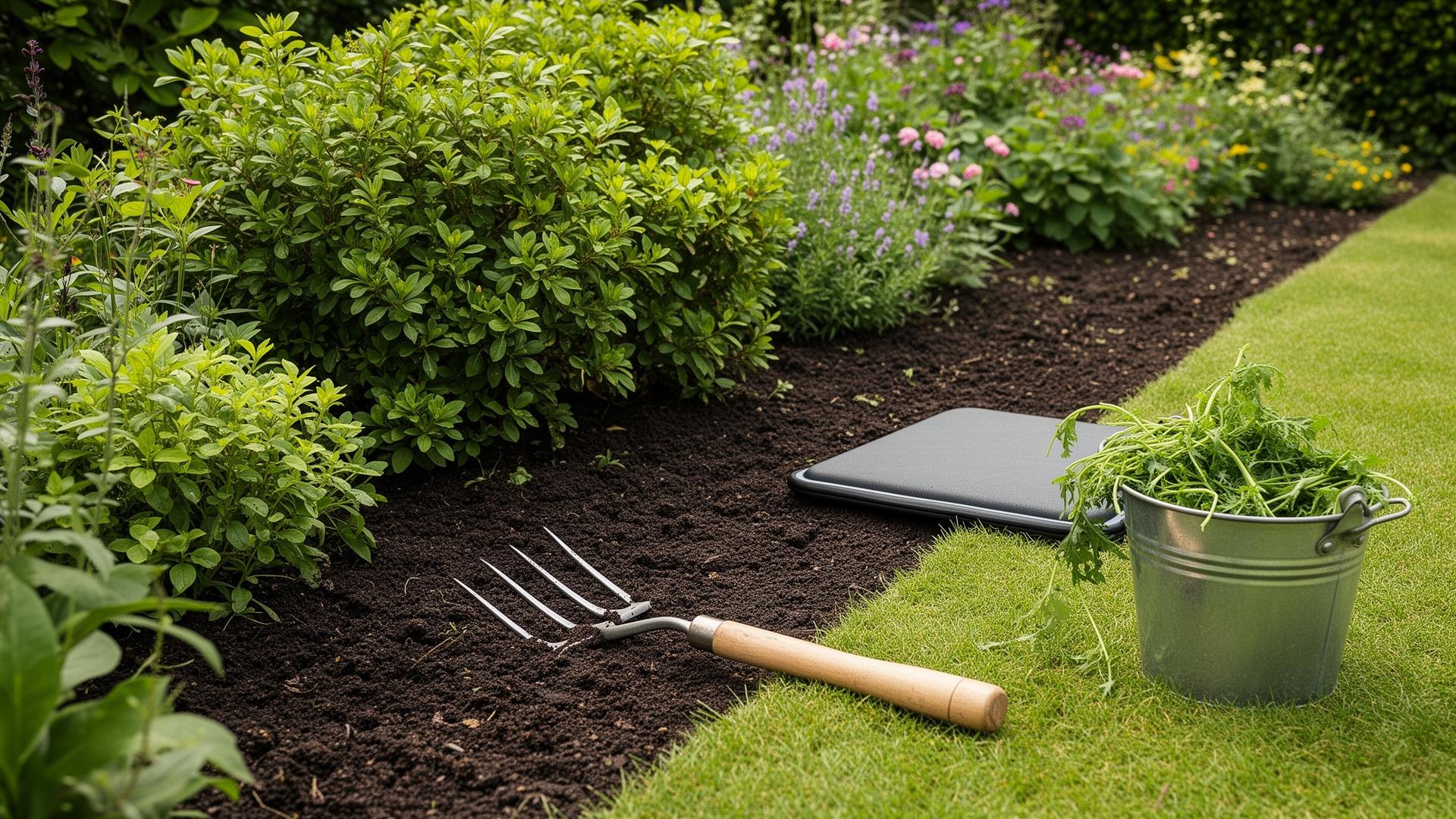
What is Weeding & Weed Control?
Weeding is the physical or chemical removal of unwanted plant species from cultivated areas—beds, borders, lawns, paths and patios—to eliminate competition for water, nutrients and light. It includes hand-pulling annuals like groundsel and shepherd's purse, extracting deep taproots of perennials like dandelion and dock, excavating rhizomes of invasive species such as couch grass and ground elder, and treating persistent weeds like bindweed or horsetail with targeted herbicide where non-chemical methods fail. Effective weed control also involves prevention: mulching to suppress germination, installing weed membrane under gravel, and maintaining clean bed edges to stop lawn grass encroaching.
Weeding is needed year-round in the UK, but peaks in spring (March–May) when warming soil triggers germination of annual weed seeds, and again in early autumn (September–October) before perennial weeds set seed and spread. Coastal Dorset's mild winters mean some weeds—chickweed, annual meadow grass—grow actively even in December and January, while sandy, free-draining soils allow deep-rooted perennials to establish quickly if left unchecked. A well-maintained garden typically needs professional weeding 2–3 times per year, with mulch top-ups and spot hand-weeding between visits.
Weeding differs from border maintenance (which includes pruning, deadheading and feeding) and lawn care (which addresses moss, thatch and turf weeds separately). It's a foundational task: without it, ornamental plants become stressed and stunted, vegetable yields drop, and gravel or paving looks unkempt. Professional weeding combines botanical knowledge—recognising species and their growth habits—with the right tools and timing to achieve clean, long-lasting results that DIY weekend efforts rarely match.